Biography & Early Life
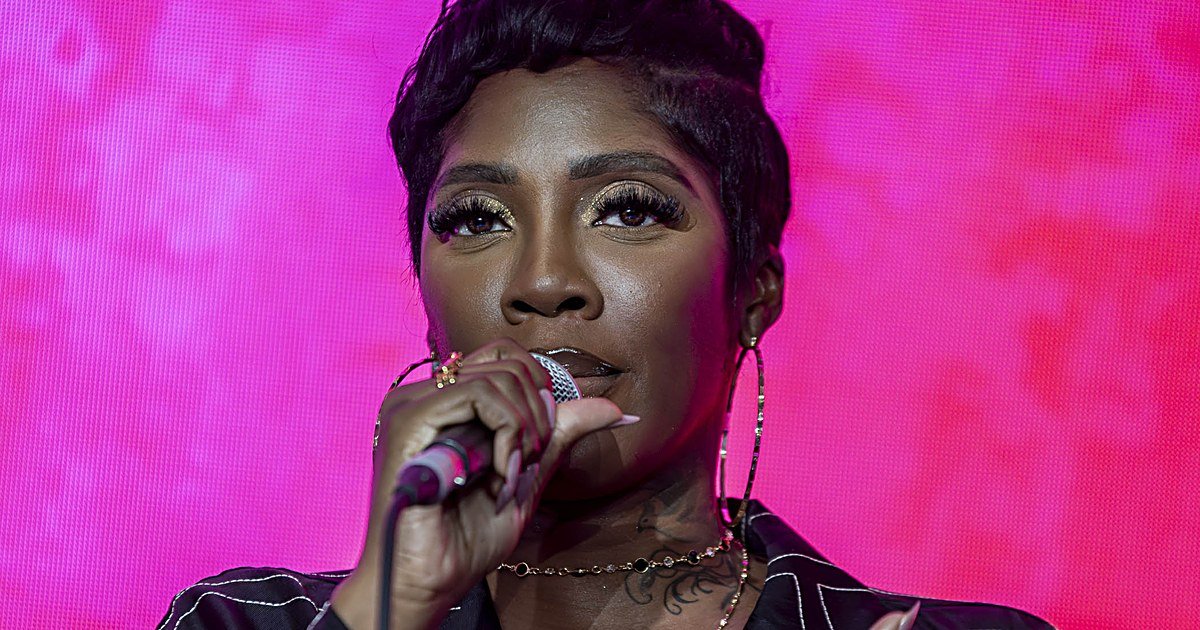
Tiwa Savage was born Tiwatope Omolara Savage on February 5, 1980, in Isale Eko, a historic quarter of Lagos Island. When she was 11, her family relocated to London, England, for her education. She studied accounting at the University of Kent — a sensible, parent-approved path — but her heart was in music. She went on to attend the prestigious Berklee College of Music in Boston, graduating in 2007, and almost immediately found work at the highest level: singing backup for George Michael and Mary J. Blige.
Her songwriting was noticed, too. She signed a songwriting deal with Sony/ATV Music Publishing and penned records for artists including Fantasia, Monica and Mýa, learning the international music business from the inside. By 2010 she had decided that her own artistry deserved the front of the stage — and that home, not London or America, was where she needed to build it.
Music Career
Tiwa Savage returned to Nigeria and signed with Don Jazzy’s Mavin Records in 2012. Her debut album, Once Upon a Time (2013), was a statement: "Kele Kele Love" and "Eminado" (featuring Don Jazzy) became instant classics, announcing a vocalist with the training of an American R&B star and the soul of a Yoruba storyteller. R.E.D followed in 2015, the Sugarcane EP in 2017 — home of the massive "Ma Lo" with Wizkid — and Celia in 2020, named for her mother, which drew international acclaim.
Her collaborations read like a map of global music: Wizkid ("Ma Lo", "Fever"), Beyoncé (The Lion King: The Gift’s "Keys to the Kingdom"), and Brandy on "Somebody’s Son". In 2019 she signed an exclusive global deal with Universal Music Group, becoming the label’s flagship African artist, and her Water & Garri EP (2021) and fifth studio album, This One Is Personal (2025), kept her at the centre of the conversation.
The awards cabinet is historic. She won MTV Africa Music Award for Best Female in 2014 and 2018, and in 2018 she became the first female artist to win Best African Act at the MTV Europe Music Awards — a landmark for African women in music. She has also won AFRIMA’s Best Female West Africa, earned BET Award nominations, and in 2023 performed at the coronation concert of King Charles III, a booking that reflected her status as a global cultural ambassador. She became the first African female artist to sell out London’s Indigo at The O2.
She has also built an acting résumé: she played Sade Banjo in MTV Shuga, appeared in the stage play For Colored Girls in 2011, and in 2024 she produced and starred in Water and Garri, released on Prime Video. Her endorsement portfolio — Pepsi, MTN, Star Lager — makes her one of Nigeria’s most commercially valuable celebrities.
Net Worth & Income
Tiwa Savage’s net worth is estimated at $7.5-15 million (approx. ₦10-20 billion), making her Nigeria’s richest female musician. Her income comes from a remarkably broad base: music streaming and catalogue royalties, headline concerts — she is reportedly paid around $100,000 per show — her Universal Music Group deal, and premium brand endorsements with Pepsi, MTN and Star Lager. Her acting work, including the self-produced Water and Garri film, adds further revenue streams.
Her business interests extend into fashion, beauty and real estate, investments that have grown her portfolio beyond the stage. The consistency of her two-decade career — no long fallow periods, no fading — is the engine: she releases, tours, endorses and acts on a rhythm that keeps every income stream flowing.
Personal Life & Family
Tiwa Savage married talent manager Tunji "Tee Billz" Balogun in 2013, and their son, Jamil Balogun, was born in July 2015. The marriage publicly broke down in 2016 and ended in divorce, and Tiwa has raised Jamil as a devoted single mother since — frequently describing motherhood as her greatest achievement and her son as her closest collaborator in life.
Her close friendship and musical partnership with Wizkid have fuelled years of romance rumours, but both have consistently said they are close friends and colleagues, not partners. She keeps her current relationships out of the public eye, and her public life now revolves around her music, her son and her business interests. At 46, she remains the standard-bearer for Nigerian women in music — and she shows no sign of stepping down.
Last updated: October 2026